WHERE
Only into the losses
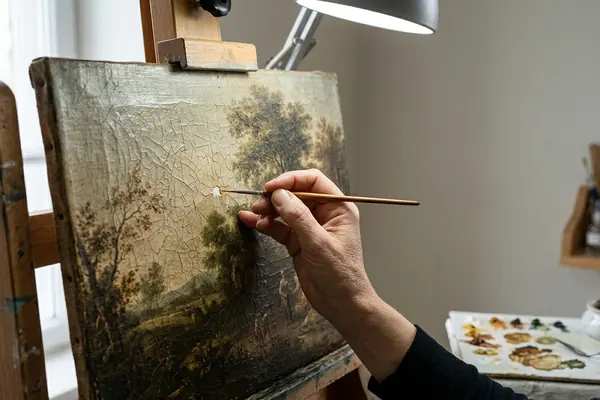
The AIC defines inpainting as new paint put into areas of loss, and only into areas of loss. It should never alter the original.
Compare approaches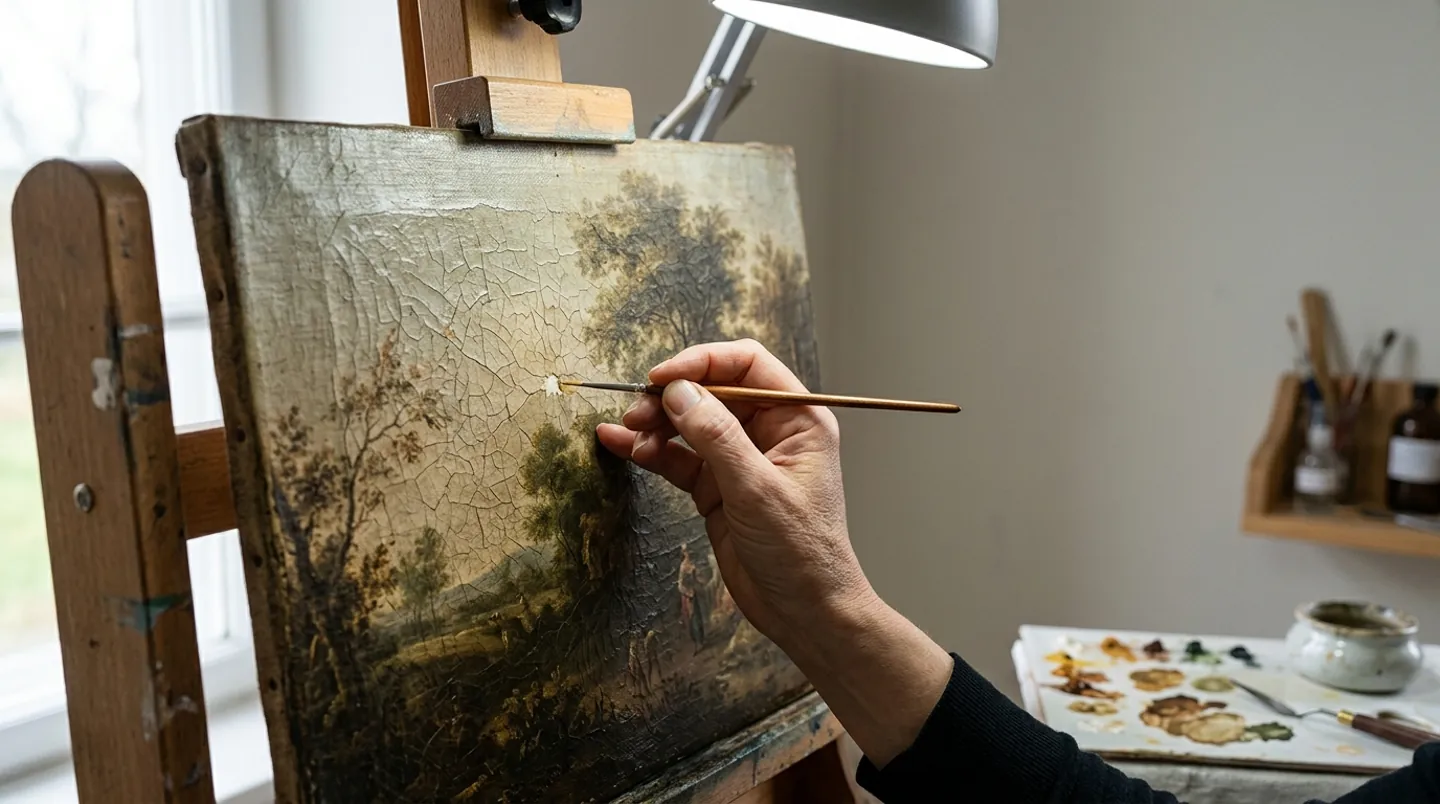
HOW PAINTINGS ARE RETOUCHED
REVERSIBLE and detectable
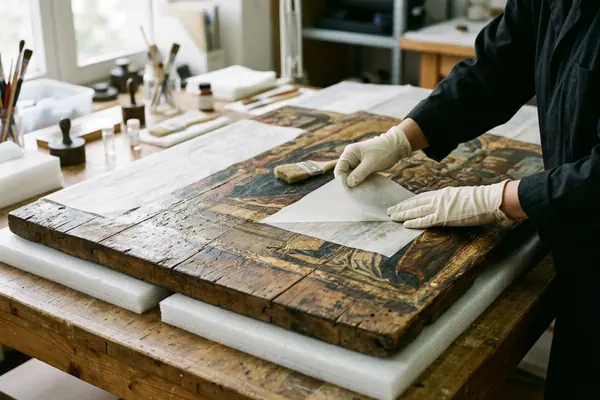
AI-generated image, not a photograph of a real person or place.
A good touch-up adds nothing the artist did not paint.
When an old painting loses flakes of paint, conservators fill the gaps so the eye reads the picture, not the damage. The rules are strict: new paint goes only into losses, in materials that can be removed again.
THE SHORT ANSWER
Retouching hides damage, not history.
Three rules keep it honest.
WHERE
The AIC defines inpainting as new paint put into areas of loss, and only into areas of loss. It should never alter the original.
Compare approachesHOW VISIBLE
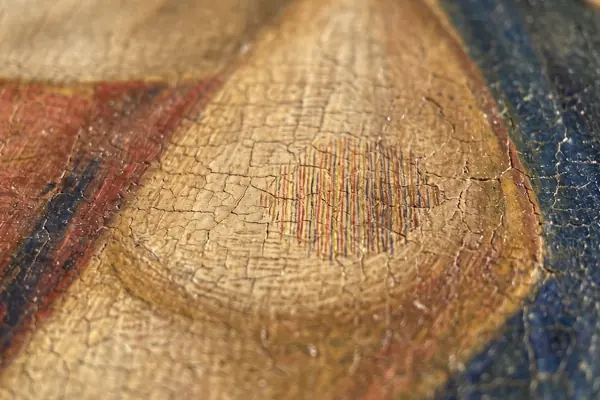
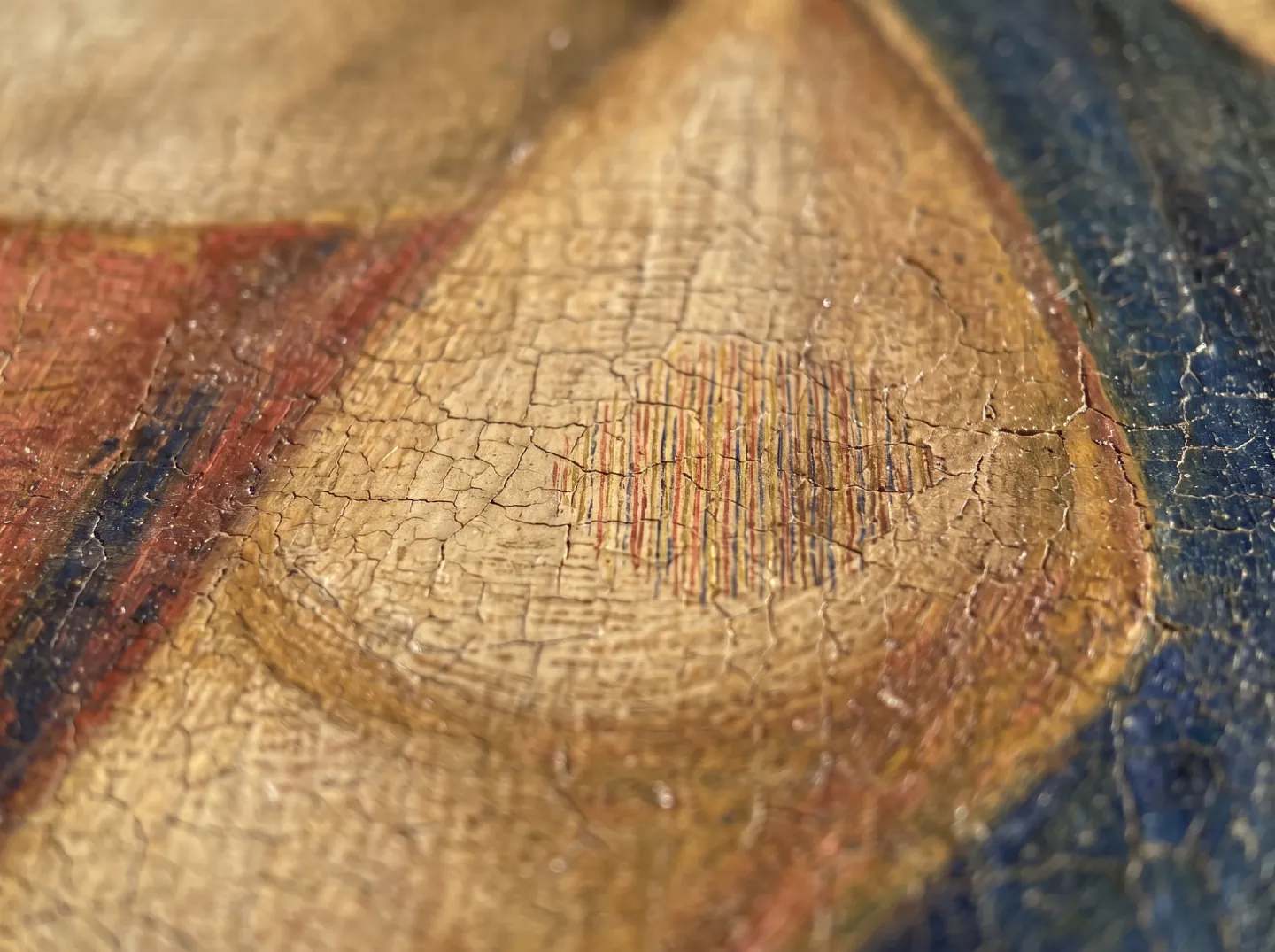
Methods like tratteggio fill a loss with fine lines that read as whole from afar but can be told apart from the original under scrutiny.
Why it mattersWHEN IT GOES WRONG
Vasari's Last Supper sat in flood water for over 12 hours in 1966. It took decades before conservators could return it to view.
See the numbers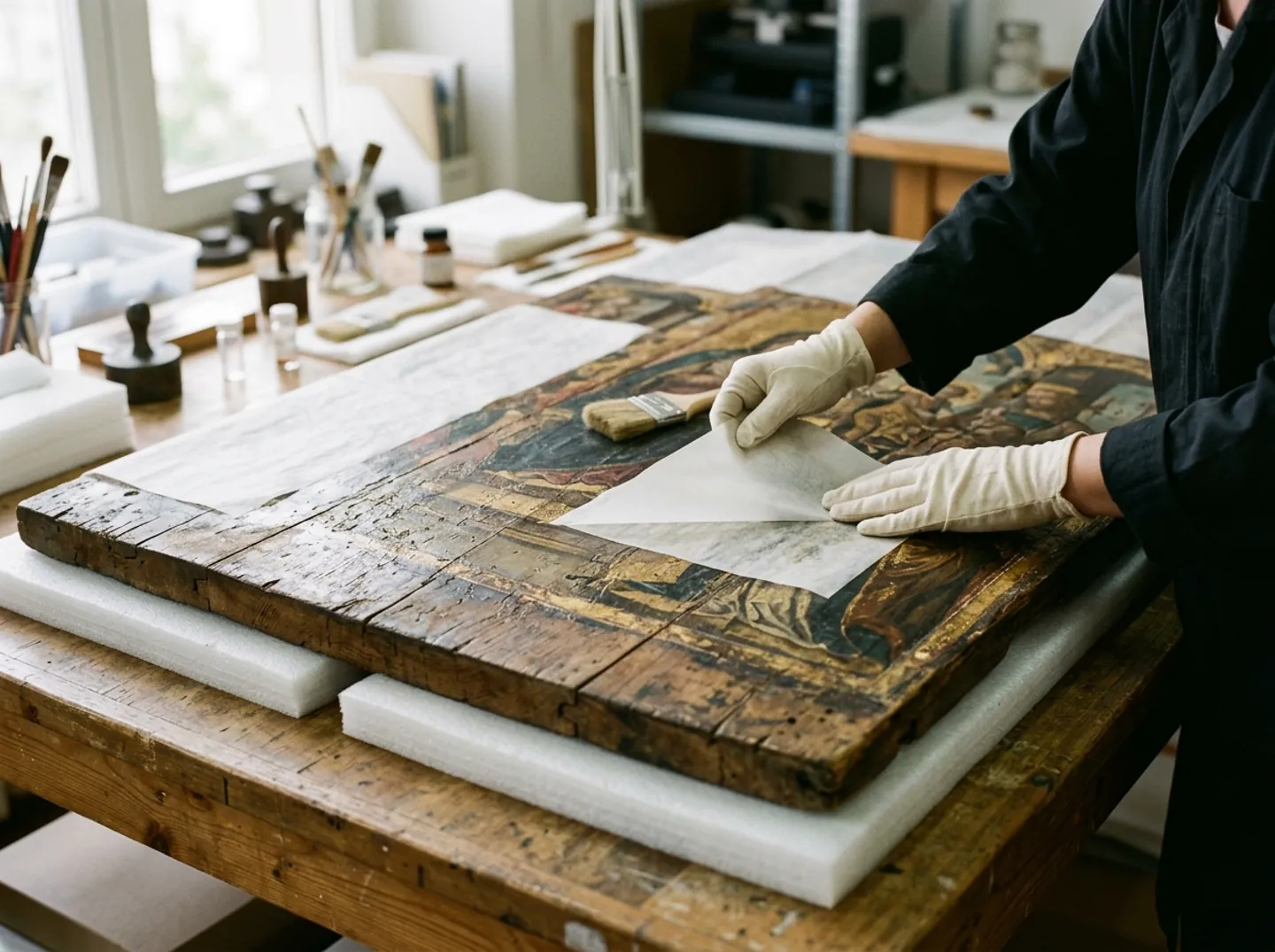
FOUR RULES CONSERVATORS WORK BY
These come from the National Gallery's glossary and the American Institute for Conservation's guidance on inpainting. They describe professional practice, not a home repair method.
New paint goes only where original paint is missing, never over it, and is not used to strengthen a weak signature.
Retouchings are made in a soluble medium that differs from the original, so a later conservator can remove them.
Repairs should show up under common examination methods such as microscopes, ultraviolet light and raking light.
Document where the inpainting is and how it was done. Photographs taken before treatment are especially important.
ONE PAINTING, TWO NUMBERS
Giorgio Vasari's Last Supper (1546),
damaged in the Florence flood of 1966.
12+ hours
Time in water, mud and heating oil
During the flood of 4 November 1966, the painting was submerged for over 12 hours, which softened the paint and saturated its wooden panels.
SUBMERGED · GETTY
50 years
Years before it went back on display
Hidden for 50 years to the day, it returned to the Museum of the Opera of Santa Croce in 2016 after a decade-long project by the Opificio delle Pietre Dure.
OUT OF VIEW · GETTY
Getty says the painting, over 8 by 21 feet on five panels, has been through no fewer than seven major floods in its 470-year life. A button now winches it up towards the ceiling if flood water threatens.
HOW MUCH TOUCHING UP?
Conservators and owners agree how far a repair should go. Pick an approach to see what it involves. The bar shows how much new paint goes onto the object.
Describes professional museum practice. Valuable works are treated by trained conservators, case by case.
INVISIBLE OR HONEST?
For centuries restorers tried to make repairs disappear. From the 1950s attitudes changed, and methods like tratteggio and selezione cromatica let viewers tell modern repair from original paint. The theorist Cesare Brandi put the limit simply: reconstruction should stop when hypothesis begins.
Nothing on the surface is meant to be forever. The National Gallery notes that varnishes darken and discolour over time and need removing and replacing, and that retouchings are made in a soluble medium so they can be removed easily.
In conversation
They are often used interchangeably. The AIC lexicon says inpainting is new paint added only into areas of loss, while overpainting partly or completely covers original paint, which conservators avoid.
So the repair can be removed later. The National Gallery says retouchings are done in a soluble medium that differs from the original. The AIC adds that different pigments can make repairs easier to detect.
Usually not with the naked eye, unless a visible method such as tratteggio was chosen. Repairs should be detectable with microscopes, ultraviolet light or raking light.
This is metamerism: two colours that match under one light can differ under another, often because the paints contain different pigments. Conservators try to match under the lighting the work will be seen in.
The AIC says the decision is made with the curator, owner or custodian, who should be told the limits and possible consequences. The extent of inpainting is agreed case by case.
Each figure on this page comes from the sources below.
ABOUT THIS NAME
doodletouchup.com is part of the DoodleSale portfolio. It isn't in an auction right now, but you can ask about leasing it.